
Many people love stainless steel frying pans. They last long and cook food well. But food often sticks or burns in them. This is common for new users. Do not worry. It is not the pan’s fault most times. It is about how you use it.
Stainless steel is different from non-stick pans. It has no special coating. Food can touch the metal directly. This makes good brown crust on meat. But if you do it wrong, food burns fast.
Common Reasons Food Burns
Here are the main reasons this happens.
- The heat is too high. Stainless steel gets very hot quickly. High heat burns food on the outside before it cooks inside. It also makes oil smoke and burn.
- You add oil or food too soon. If the pan is cold, food sticks right away. Then it burns as the pan heats up.
- You do not preheat the pan the right way. The pan needs to be hot before oil. But not too hot.
- You move the food too much or too soon. Food sticks at first. If you try to flip it early, it tears and burns.
- Wet food or too much food in the pan. Cold or wet food from the fridge makes steam. This stops good cooking and causes sticking. Too much food cools the pan.
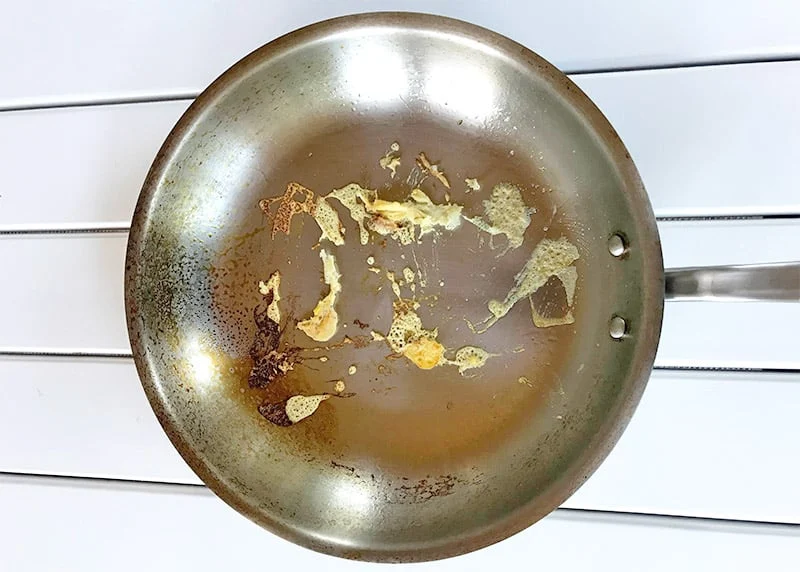
This picture shows food sticking and burning in a stainless steel pan. It happens when the pan is not ready.
How to Stop Food from Burning
Follow these easy steps. Practice a few times. You will get good results.
- Start with a clean pan. Wash it well. Dry it fully. Old bits of food can burn again.
- Use medium heat. Turn your stove to medium or medium-high. Do not use high heat all the time.
- Preheat the pan first. Put the empty pan on the stove. Heat for 2-3 minutes. Test it: Drop a few water drops. If they dance and slide like balls, the pan is ready. This is called the Leidenfrost effect.
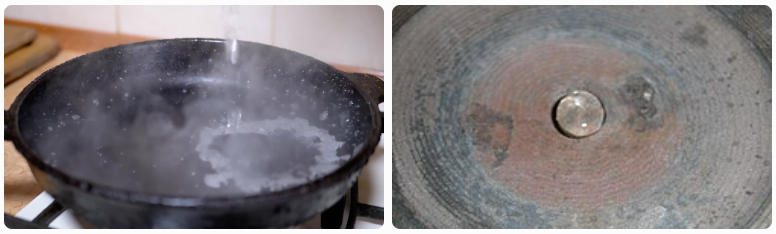
See how water drops dance on a hot pan? That means it is hot enough.
- Add oil after the pan is hot. Put in oil or butter. Wait until it shines or shimmers. Do not let it smoke.
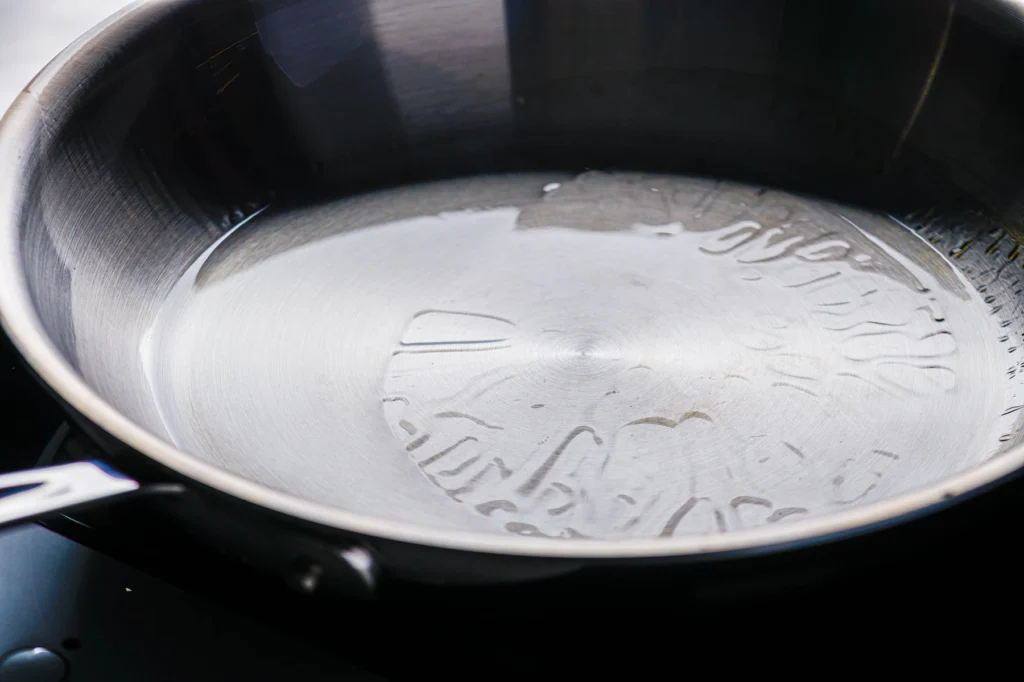
Oil looks shiny when the pan is ready.
- Add food that is dry and at room temperature. Pat meat or veggies dry with paper. Let cold food sit out for a bit.
- Do not touch the food right away. Let it cook on one side. It will stick at first. When it forms a crust, it will come off easy. Then flip.
- Stir or move food often if needed. For veggies or eggs, stir to stop hot spots.
- Use enough oil, but not too much. A thin layer is good.
Extra Tips
- Good pans heat more evenly. Thick bottoms help.
- If food burns a little, it is okay. That brown bit adds flavor.
- Clean the pan soon after cooking. Use soft sponge.
With these steps, your stainless steel pan will work great. Food will not burn much. You will enjoy cooking more. Try it next time!

By day, I’m a Doctor of Clinical Psychology student (Psy.D.) at Philadelphia College of Osteopathic Medicine – basically learning how the brain works while drinking way too much coffee.
By night (and weekends, and lunch breaks…), I’m a total kitchen geek. I’m that person who gets excited over a new spatula, owns three different vegetable choppers “for science,” and has strong feelings about which nonstick pan actually stays nonstick.